
Civil Engineering Consultants
9 AM to 7 PM Monday-Saturday
Ph: +91-9571483735 (sales)
+91-9571483735 (Sales)
Email: sales@geovate.co.in (Sales)
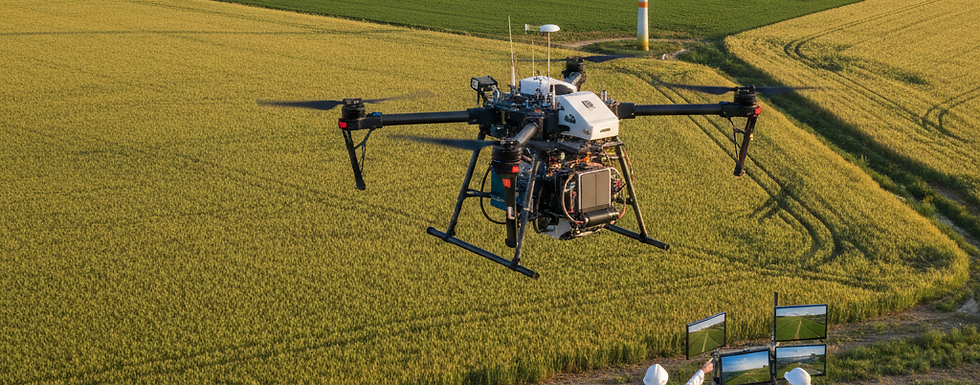
Remote Sensing Survey Company in Varanasi, Uttar Pradesh |Geovate
Remote sensing survey companies specialize in collecting and analyzing geospatial data using advanced technologies such as satellites, drones, aircraft, and LiDAR systems. Their primary purpose is to provide accurate, large-scale information about the Earth’s surface without requiring direct contact with the surveyed area. By capturing electromagnetic radiation reflected or emitted from objects, they generate valuable insights into land use, vegetation, water resources, and infrastructure. These companies play a crucial role in supporting industries, governments, and researchers by offering reliable data for planning, monitoring, and decision-making. Remote sensing surveys are faster, safer, and more cost-effective than traditional ground-based methods, making them indispensable in modern resource management and sustainable development initiatives
The applications of remote sensing survey companies are vast and span multiple industries. In agriculture, they help monitor crop health, soil moisture, and irrigation needs, enabling precision farming practices. Environmental agencies use remote sensing to track deforestation, land degradation, and climate change impacts. Urban planners rely on these surveys for infrastructure development, zoning, and smart city projects. In disaster management, remote sensing provides real-time data on floods, landslides, and earthquakes, supporting emergency response efforts. Mining and geology sectors benefit from remote sensing for mineral exploration and terrain mapping. Water resource managers employ it to monitor reservoirs, rivers, and groundwater. These applications demonstrate the versatility of remote sensing survey companies in delivering actionable insights across diverse fields.
Remote sensing survey companies employ several methods to capture and process geospatial data. Satellite remote sensing uses multispectral and hyperspectral sensors to collect large-scale imagery for land use and environmental monitoring. Aerial remote sensing, often conducted with drones or aircraft, provides high-resolution data for smaller regions and infrastructure projects. Optical remote sensing captures reflected sunlight in visible and infrared bands, useful for vegetation and soil studies. Radar remote sensing, particularly Synthetic Aperture Radar (SAR), penetrates clouds and operates day or night, making it ideal for terrain mapping and disaster monitoring. Thermal remote sensing detects heat emissions, supporting applications in agriculture and urban studies. LiDAR technology generates precise 3D models of terrain and infrastructure, enhancing accuracy in planning and analysis.
Remote Sensing Survey Company in Varanasi, Uttar Pradesh |Geovate
Remote Sensing Survey Company in Varanasi Geovate
Remote Sensing Survey Company in Varanasi, Uttar Pradesh.Accurate Data Collection,Decision Support,Cost Reduction|Satellite Remote Sensing,Aerial Remote Sensing,LiDAR
The benefits of remote sensing survey companies are significant, making them essential for modern data-driven industries. Speed is a major advantage, as large areas can be surveyed quickly compared to traditional ground methods. Safety is improved by reducing human exposure to hazardous or inaccessible regions. Cost efficiency is achieved by minimizing labor and equipment requirements while delivering high-quality results. Accuracy is enhanced through advanced sensors and processing techniques, often achieving detailed spatial and temporal resolution. Remote sensing also provides consistency, enabling repeat surveys over time for monitoring changes. These benefits empower industries and governments to make informed decisions, optimize resources, and implement sustainable practices. Remote sensing survey companies thus play a vital role in advancing global development.
The future of remote sensing survey companies looks promising as technology continues to evolve. Integration with artificial intelligence and machine learning will enhance data analysis, enabling predictive insights and automated reporting. The adoption of 5G networks will allow real-time transmission of remote sensing data, improving responsiveness and collaboration. As satellite constellations expand, companies will gain access to higher-resolution and more frequent imagery. Emerging applications such as climate change monitoring, smart city planning, and digital twin creation will further increase demand. With advancements in sensor technology, cloud-based processing, and autonomous aerial platforms, remote sensing survey companies are poised to become even more efficient and versatile. Their role will continue to grow as industries increasingly rely on geospatial intelligence for sustainable development.
